Hidden Gems Of Ranthambore National Park Most Tourists Miss
Most people visit Ranthambore National Park with just one goal — to see a tiger.
And that’s where they miss the real story.
Ranthambore is not just about wildlife sightings. It is one of the most layered wildlife experiences in India, where history, forests, lakes, and big cats exist in the same frame. Very few national parks in India offer this kind of depth.
Visitors often ask:
- Are there historical places inside Ranthambore National Park?
- Where can I find lakes and old structures for wildlife photography?
The answer lies in three hidden gems of Ranthambore:
Jogi Mahal, Padam Lake, and the Great Banyan Tree.
These places don’t just make Ranthambore beautiful — they make it unforgettable.

Jogi Mahal Ranthambore – History Meets Wildlife Photography
Jogi Mahal is an old royal guest house located beside Padam Lake, under the shadow of the Ranthambore Fort. It was once used as a royal hunting lodge by Jaipur’s rulers and later became a rest house for forest officers and researchers.
Today, many travellers search:
Can tourists visit Jogi Mahal during Ranthambore safari?
You cannot enter the building, but safari vehicles stop near the lake viewpoint, offering a clean, straight view of Jogi Mahal with water in front and forest behind.
That single angle is what makes this place special.
See Ranthambore beyond tiger sightings — book your safari: +91-9344813299 | www.flyinghornbill.com |email to [email protected]
Why Jogi Mahal Is a Photographer’s Dream
Jogi Mahal allows you to place three stories in one frame:
- Wildlife
- Landscape
- History
When a tiger walks along Padam Lake with the Mahal behind it, the image stops being a photo — it becomes visual storytelling. This is why many wildlife photographers rank Jogi Mahal as one of the finest photography spots in Ranthambore National Park.

Jogi Mahal Ranthambore with lake
Padam Lake Ranthambore – Best Place to See Tigers and Reflections
Padam Lake is the largest lake inside Ranthambore National Park and lies in Zone 3, the same zone where famous tigresses like Machli and Arrowhead once ruled.
Many people ask:
Which lake in Ranthambore gives the best chance of seeing a tiger?
Padam Lake is the answer.
Early mornings here are magical. Soft golden light falls directly on the water, creating mirror-like reflections of sambar deer, birds, crocodiles, and sometimes — tigers.
This is where photographers stop chasing close-ups and start capturing habitat stories.
Photography Tips for Padam Lake
- Use lake water as the foreground to add depth
- Place Jogi Mahal or fort walls in the background
- Shoot during the first hour of the morning safari
Padam Lake feels alive. Every minute brings movement — spotted deer drinking, crocodiles resting, peacocks calling, and occasionally a tiger emerging from the grass.
📞 Book your Ranthambore safari: +91-9344813299
🌐 www.flyinghornbill.com
📧 Email: [email protected]
The Great Banyan Tree – A Living Giant of Ranthambore
Right next to Jogi Mahal stands one of the largest banyan trees in India, hidden deep inside the park.
People often ask:
Is it true there is a huge banyan tree inside Ranthambore?
Yes — and it’s breathtaking.
The banyan spreads across a massive area with thousands of aerial roots. It creates deep natural shade, making it a favourite resting place for animals. When sunlight filters through the branches, the place turns into a natural photography studio.
Experience Ranthambore the right way. Book your safari: +91-9344813299
Best Way to Photograph the Banyan Tree
- Use a wide-angle lens to show scale
- Shoot from a low angle to make roots look dramatic
- Place the tree slightly off-center
If a tiger ever walks under those roots — even once in your lifetime — the image becomes priceless.
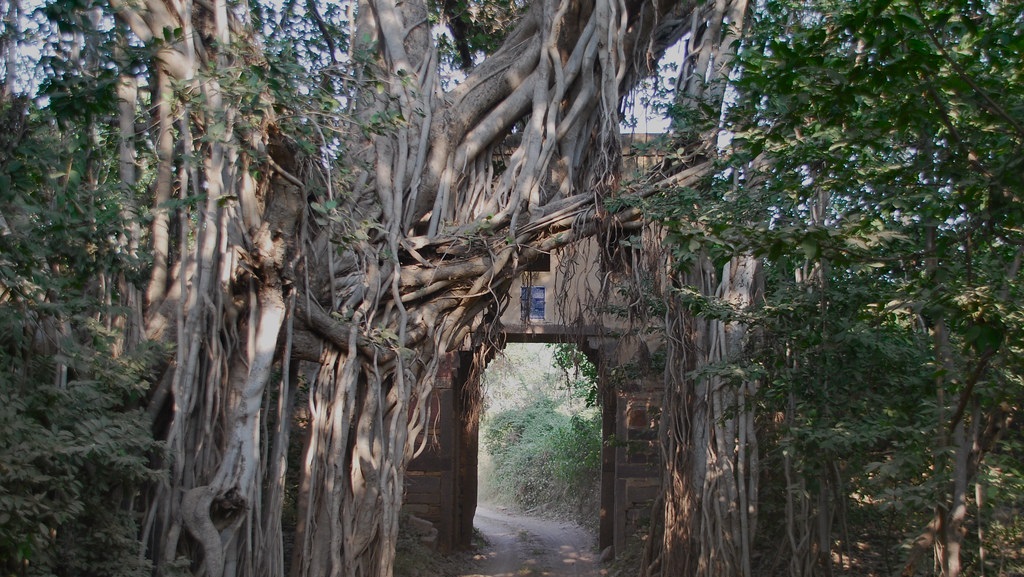
Great Banyan Tree inside Ranthambore National Park
Why These Hidden Gems Make Ranthambore Special
Most national parks show animals.
Ranthambore shows stories.
Here, tigers walk past palaces. Crocodiles sleep below fort walls. Deer graze under banyan roots. Nature and history are not separated — they are merged.
This rare combination creates emotionally powerful wildlife experiences that no other tiger reserve in India can match.
Visitors often say:
“The forest looks like a painting.”
That’s because every frame is layered — wildlife, water, history, forest, and sky.
Best Zone and Time to Visit These Places in Ranthambore
| Place | Zone | Best Time | What Makes It Special |
|---|---|---|---|
| Jogi Mahal | Zone 3 | Morning safari | Palace + lake frame |
| Padam Lake | Zone 3 | First hour after sunrise | Tiger reflections |
| Banyan Tree | Zone 3 | Morning / late afternoon | Soft light & roots |
Zone 3 remains the most photographed zone in Ranthambore National Park for a reason.
Where to Stay & Experiences Around Ranthambore
To truly experience these hidden gems, stay close to the park and plan early-morning safaris.
- Best hotels near Ranthambore National Park
- Luxury wildlife resorts in Ranthambore
- Ranthambore safari booking online
- Wildlife photography tours in Ranthambore
- Guided Ranthambore jeep safari experience
Final Thoughts
Ranthambore is more than tiger sightings. It is a place where history breathes through old walls and nature flows through lakes and trees.
Jogi Mahal carries royal memories.
Padam Lake brings life and movement.
The Great Banyan Tree stands as a silent witness to centuries.
If you want to see Ranthambore beyond its tigers, explore these hidden gems. Every photograph you take here becomes a story that stays with you.
📞 Book your Ranthambore safari: +91-9344813299
🌐 www.flyinghornbill.com
📧 Email: [email protected]

About Navaneeth Krishnan
Navaneeth Krishnan is a premier Travel Curation Expert with 14+ years of experience. Having partnered with top travel brands, he knows India’s tourist spots like the back of his hand, making him the trusted expert to design your next unforgettable, perfectly tailored tour.